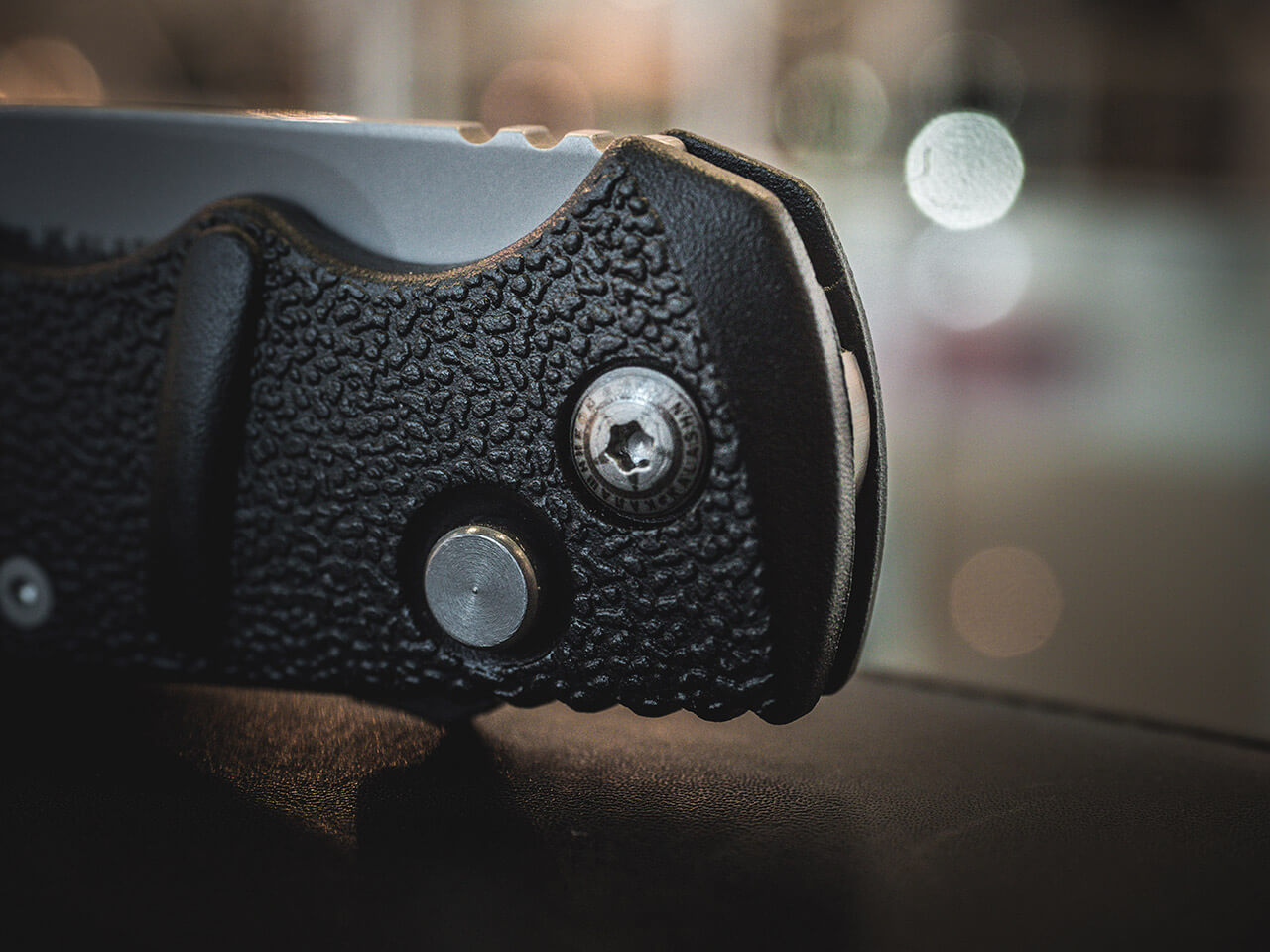
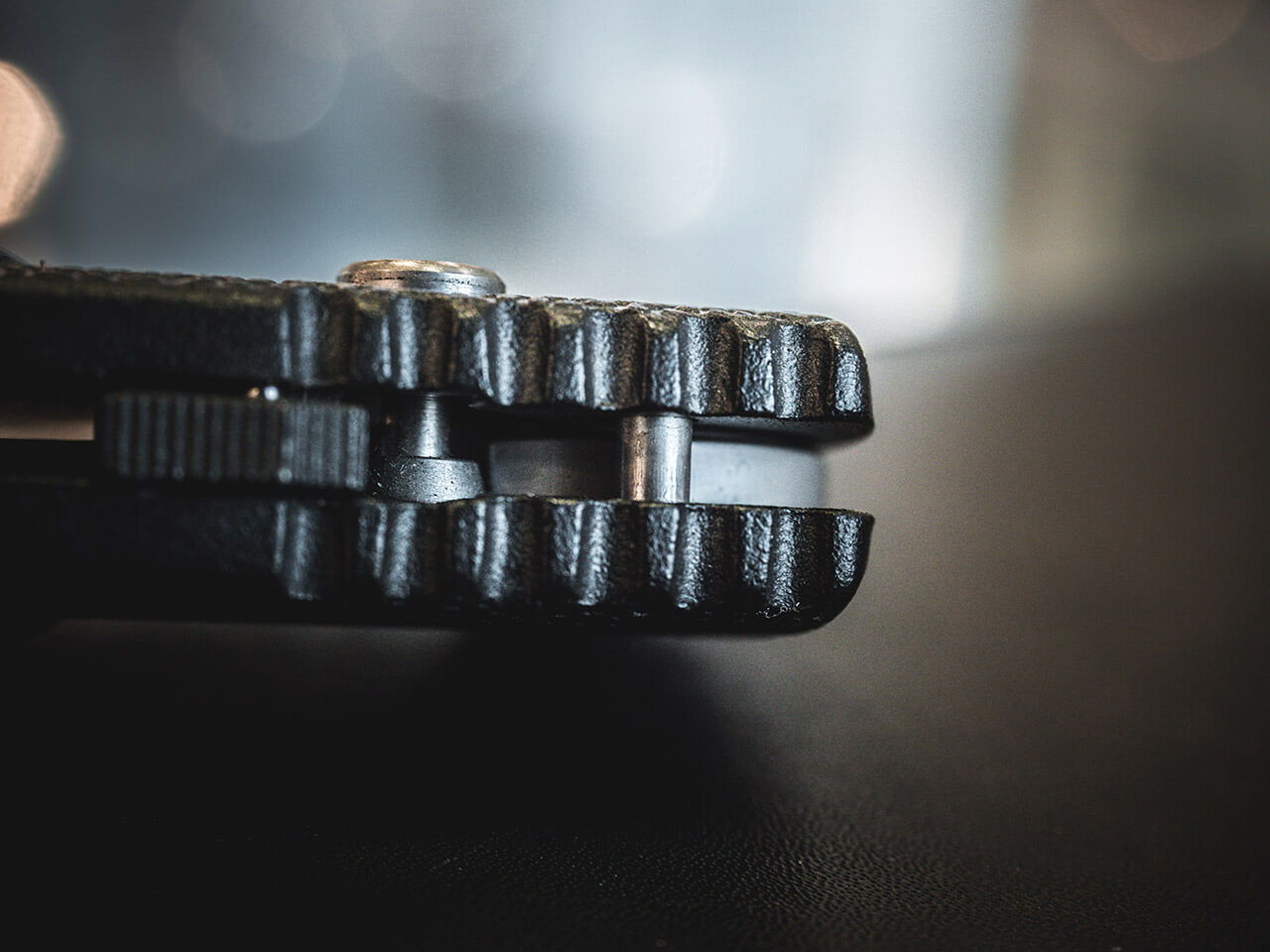
The first pocket knives in history were already in use in Roman antiquity, although these lacked locking mechanisms and were held open solely by friction against the inner sides of the handles. Today, these simple knives are known as friction folders . To make pocket knives safer to use, numerous mechanisms have been developed over the centuries to lock the open blades in place. We would like to briefly explain the workings of the most common designs here.
FRAMELOCK
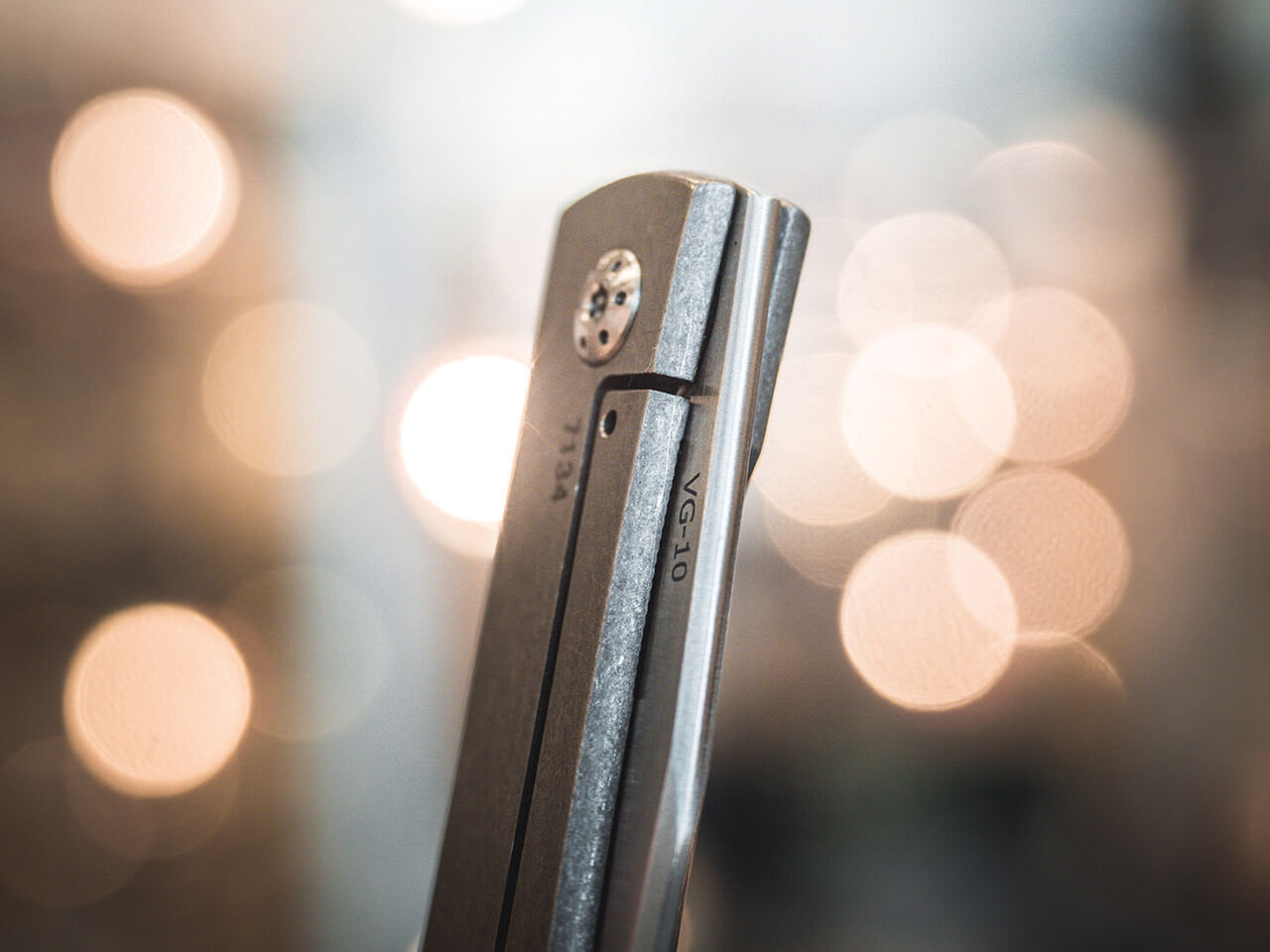
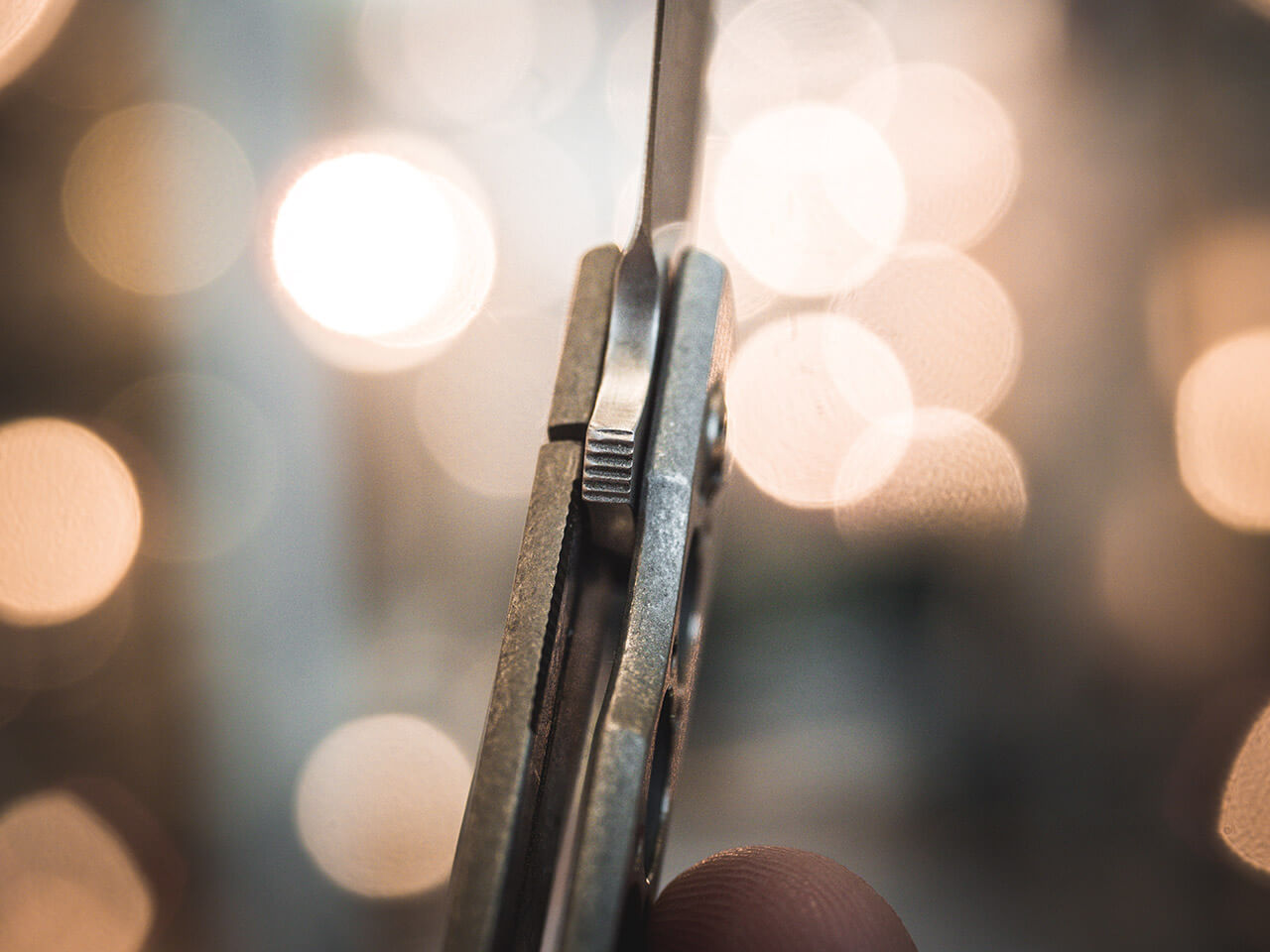
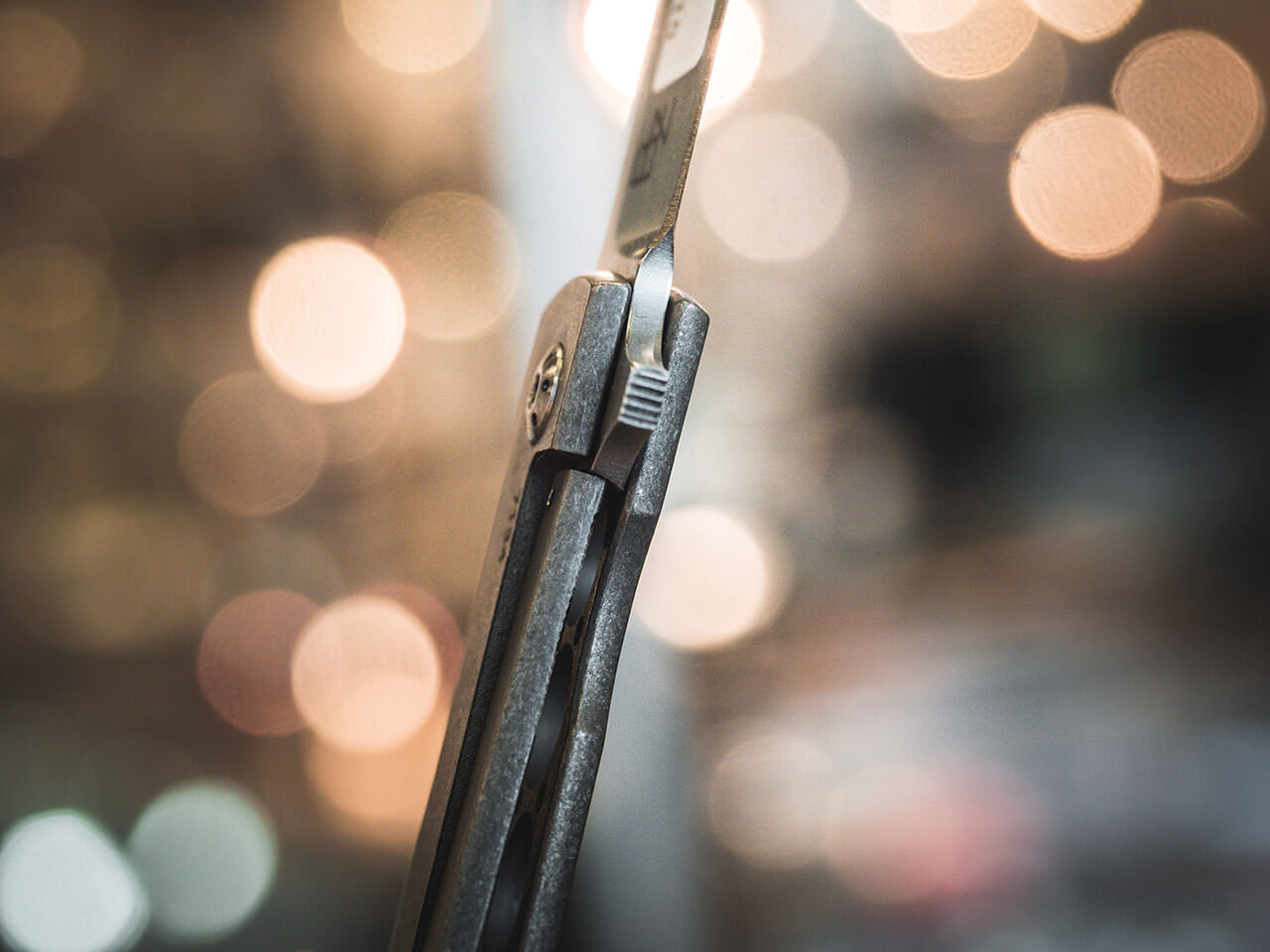
This blade locking mechanism was invented by Chris Reeve, who originally coined the term "Integral Lock" for it. The mechanism is based on a locking spring that is part of the handle frame, which is usually made of titanium or aluminum . The locking spring is a bar cut lengthwise into one of the two handle halves, which is under tension. When the blade is opened, this bar snaps into place under the blade tang and locks it. To close the blade, the locking spring is pushed to the side. In the closed position, a small ball (detent ball) pressed into the locking spring engages in a tiny recess in the blade tang, preventing the blade from accidentally opening. The relatively simple design allows for a very slim profile in framelock folders. To reduce wear, some manufacturers have switched to mounting a replaceable steel plate at the contact point between the aluminum or titanium spring and the blade tang. This prevents direct friction between the softer materials and the steel blade tang. Additionally, some framelock models feature an overextension protection device: a small washer screwed onto the handle scale prevents the spring from being pushed out too far when unlocked. This washer can also act as an additional locking mechanism for the locking spring.
BACKLOCK
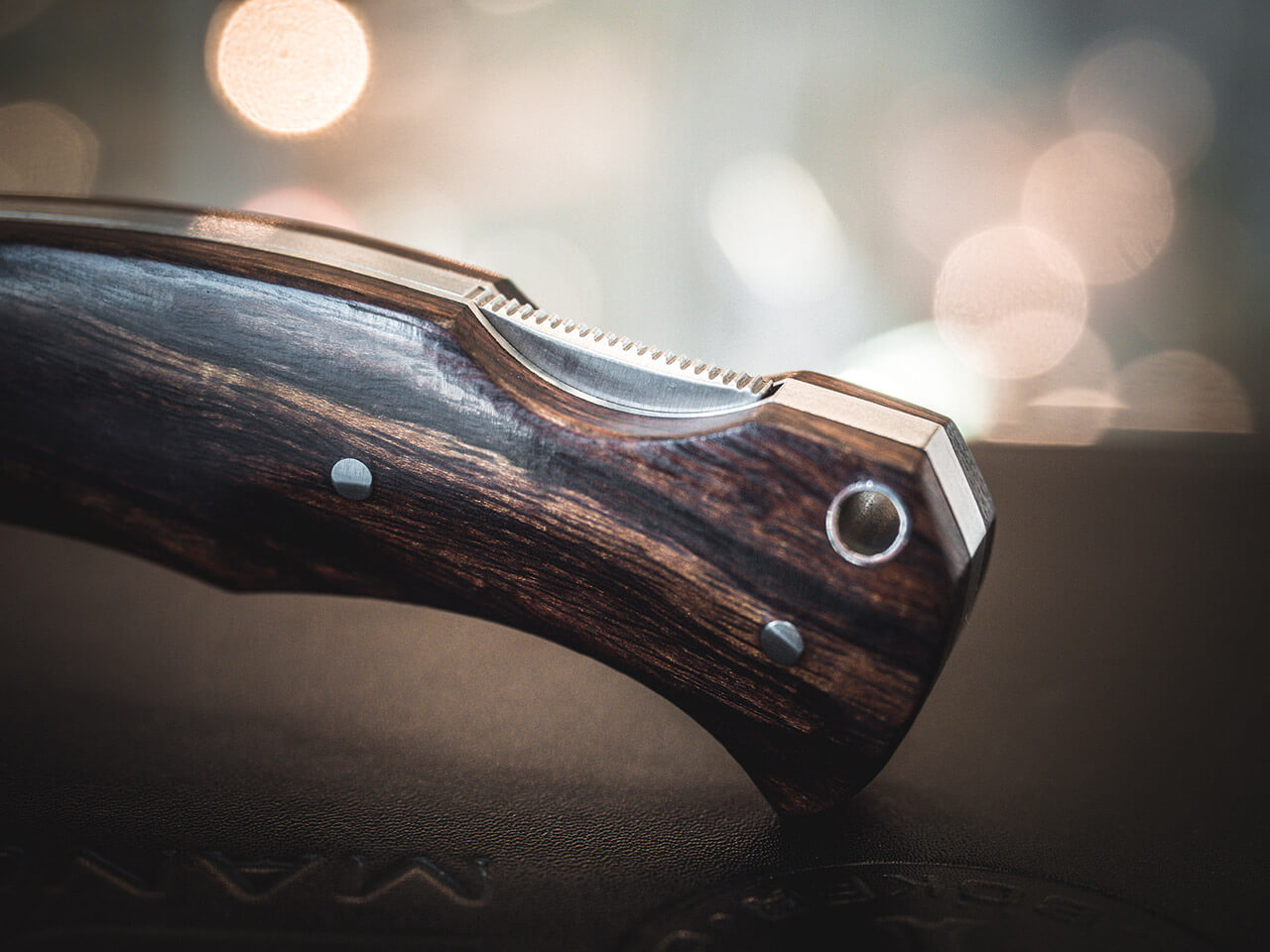
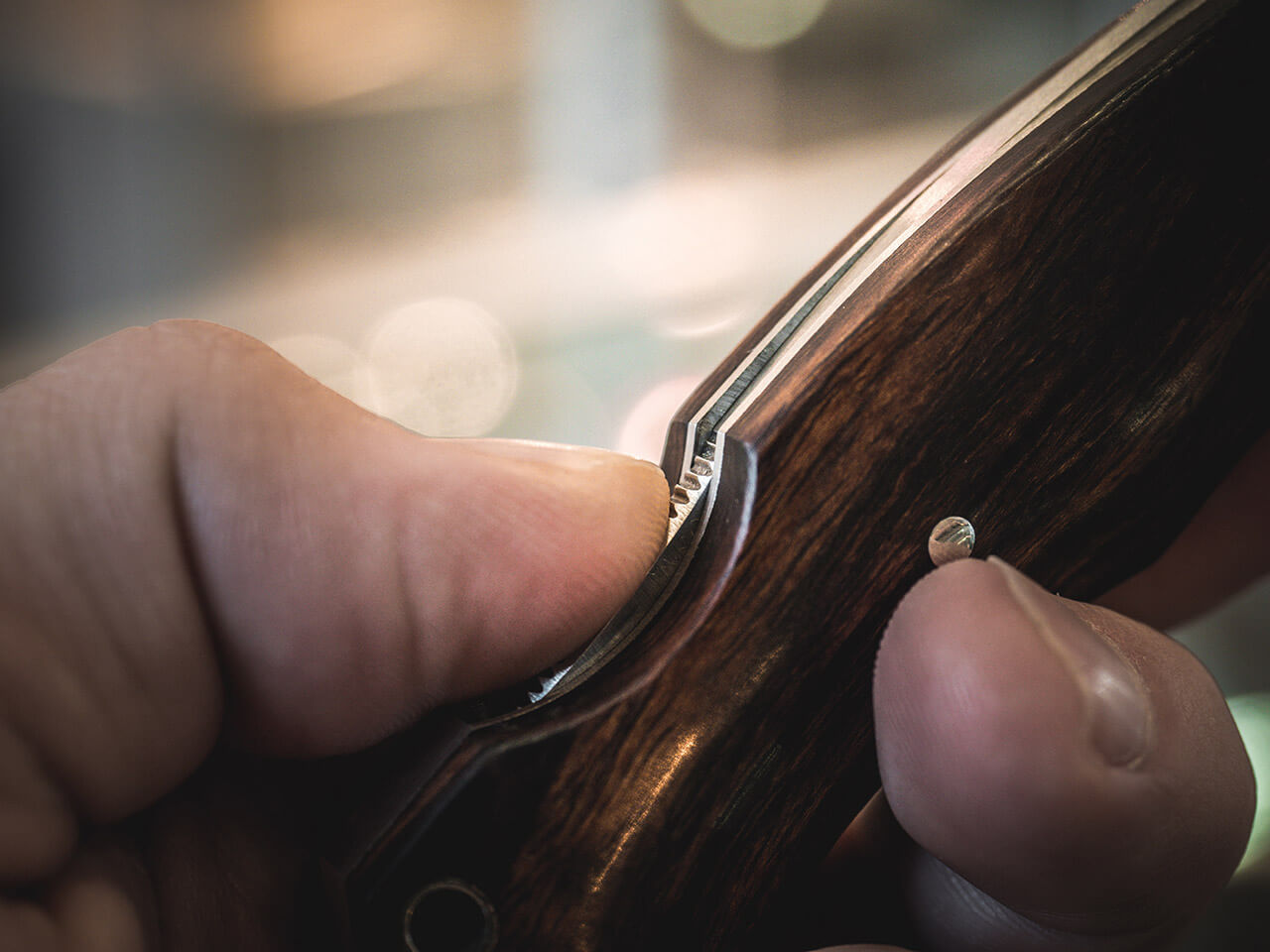
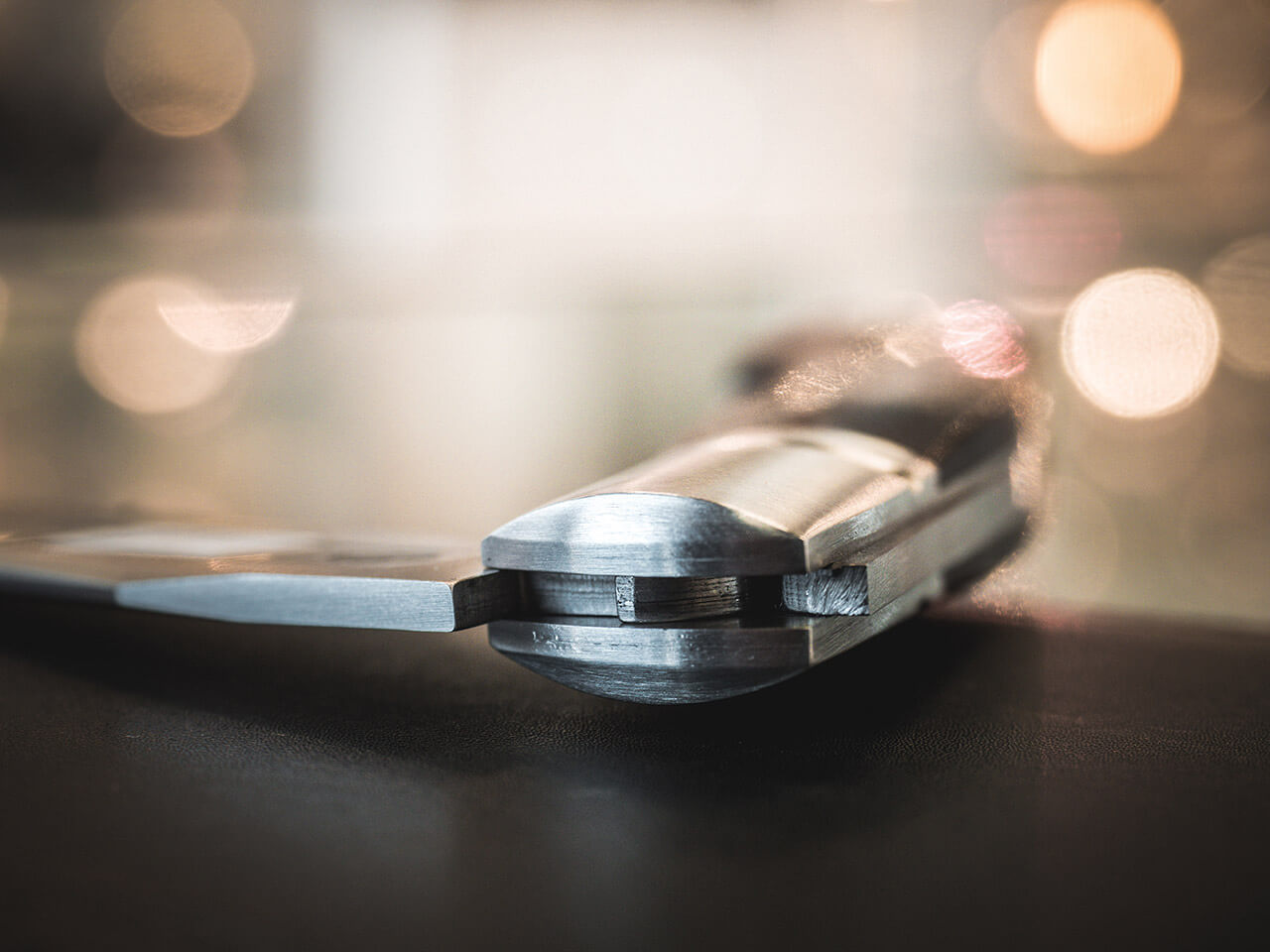
The backlock mechanism, also known as a back lock, is a proven design originating in the 19th century. It consists of two components: a locking lever held under tension by a spring anchored at the rear of the handle. At the front, the lever engages a correspondingly shaped groove in the blade tang with a hammer-shaped head. To release the lock, the lever is pressed downwards against the spring's pressure. Typically, there is a crescent-shaped indentation at the rear of the handle to facilitate pressing the lever. However, there is also a variant where the release mechanism is located in the middle of the handle's back (mid- backlock ). Even when the blade is folded, the locking lever presses against an edge of the blade tang to prevent accidental opening. Due to their symmetrical design, backlock folders are suitable for both right- and left-handed users.
SLIPJOINT
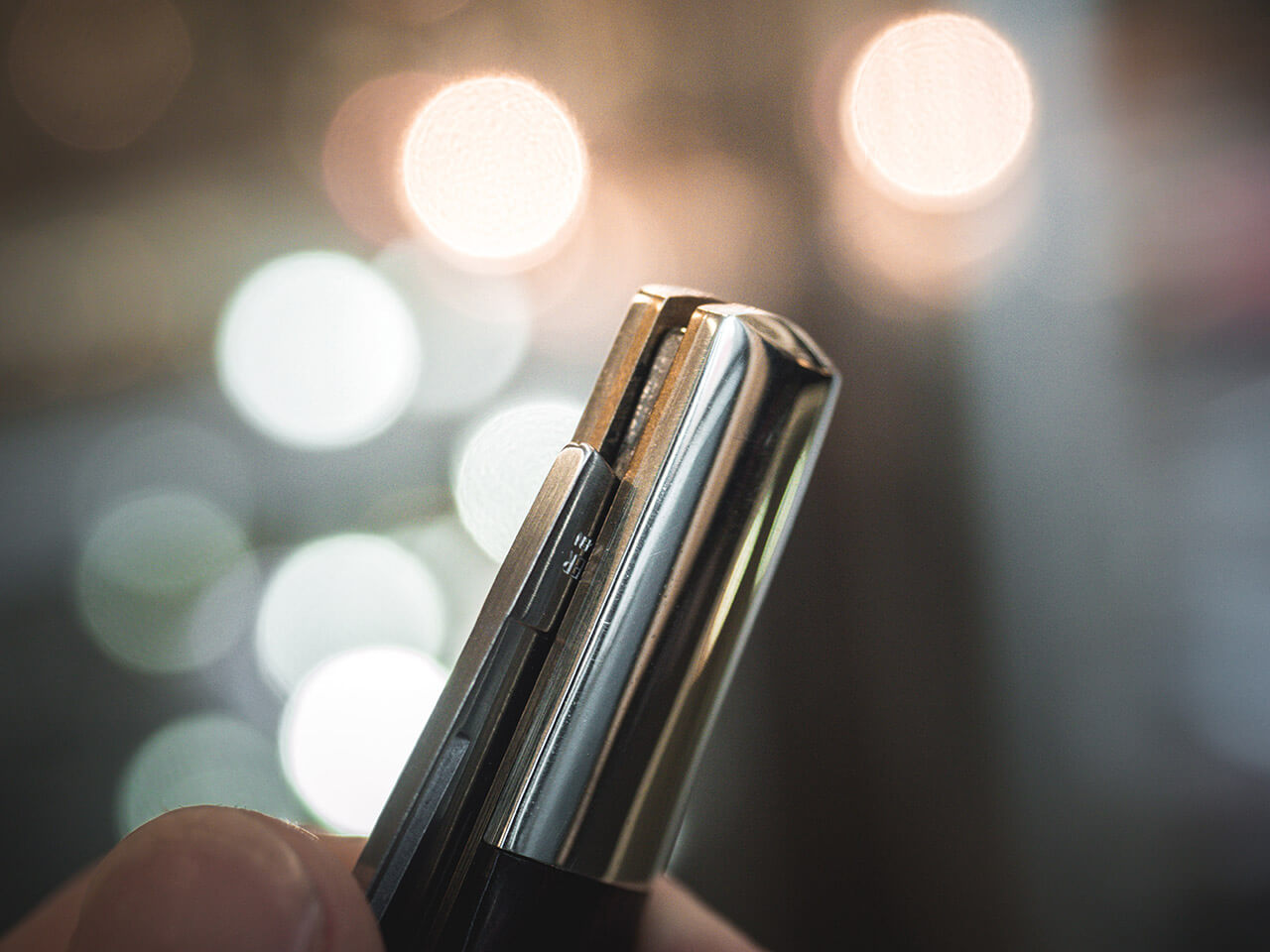
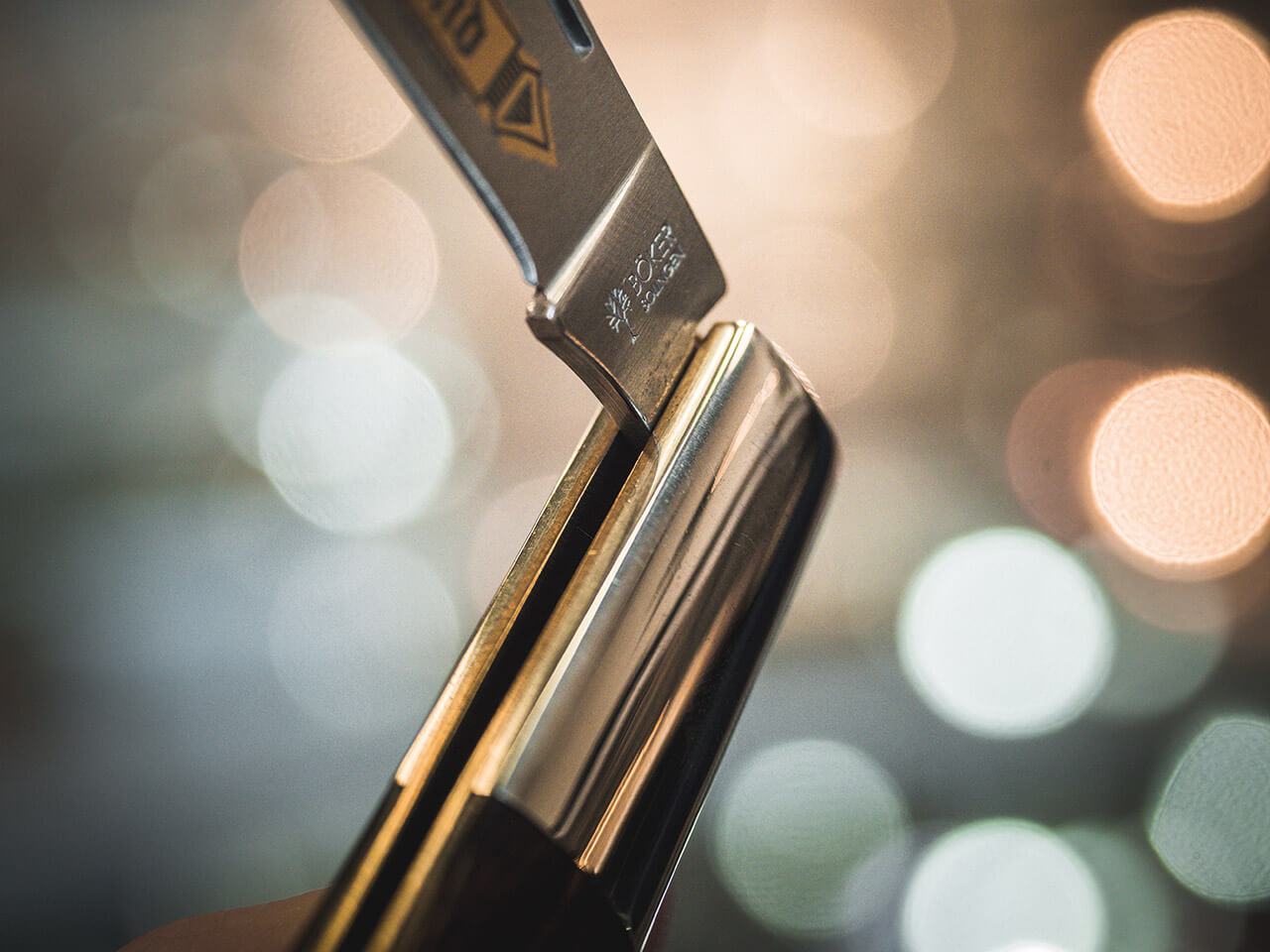
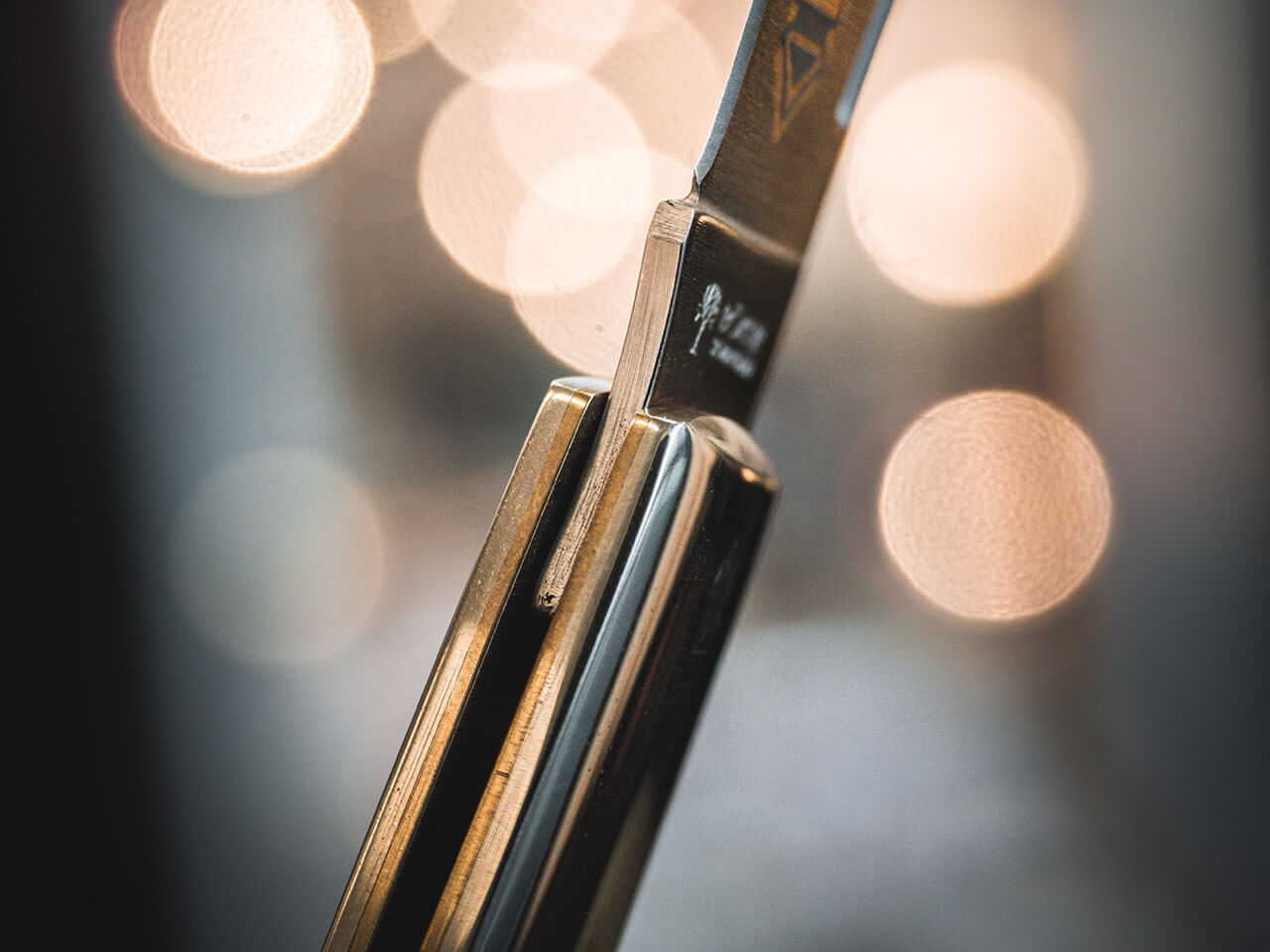
Around the mid-17th century, English cutlers invented the slipjoint mechanism. Mounted between the handle scales, the spring presses against a stepped recess in the blade tang, thus preventing the blade from folding. This mechanism, known as a slipjoint , is not strictly a locking system because the blade does not need to be unlocked before closing the knife. When folding, the blade simply has to overcome the resistance of the slipjoint spring. The spring tension also prevents the blade from accidentally opening. Slipjoint knives are particularly popular in Germany because, under current legislation, they are not subject to any restrictions on carrying them. However, one disadvantage of this type of pocket knife is that the blade can fold unintentionally if used carelessly. To improve safety, some slipjoint models feature a so-called half stop: when the blade is closed, it clicks noticeably into place at the 90-degree position, thus protecting the fingers.
LINERLOCK
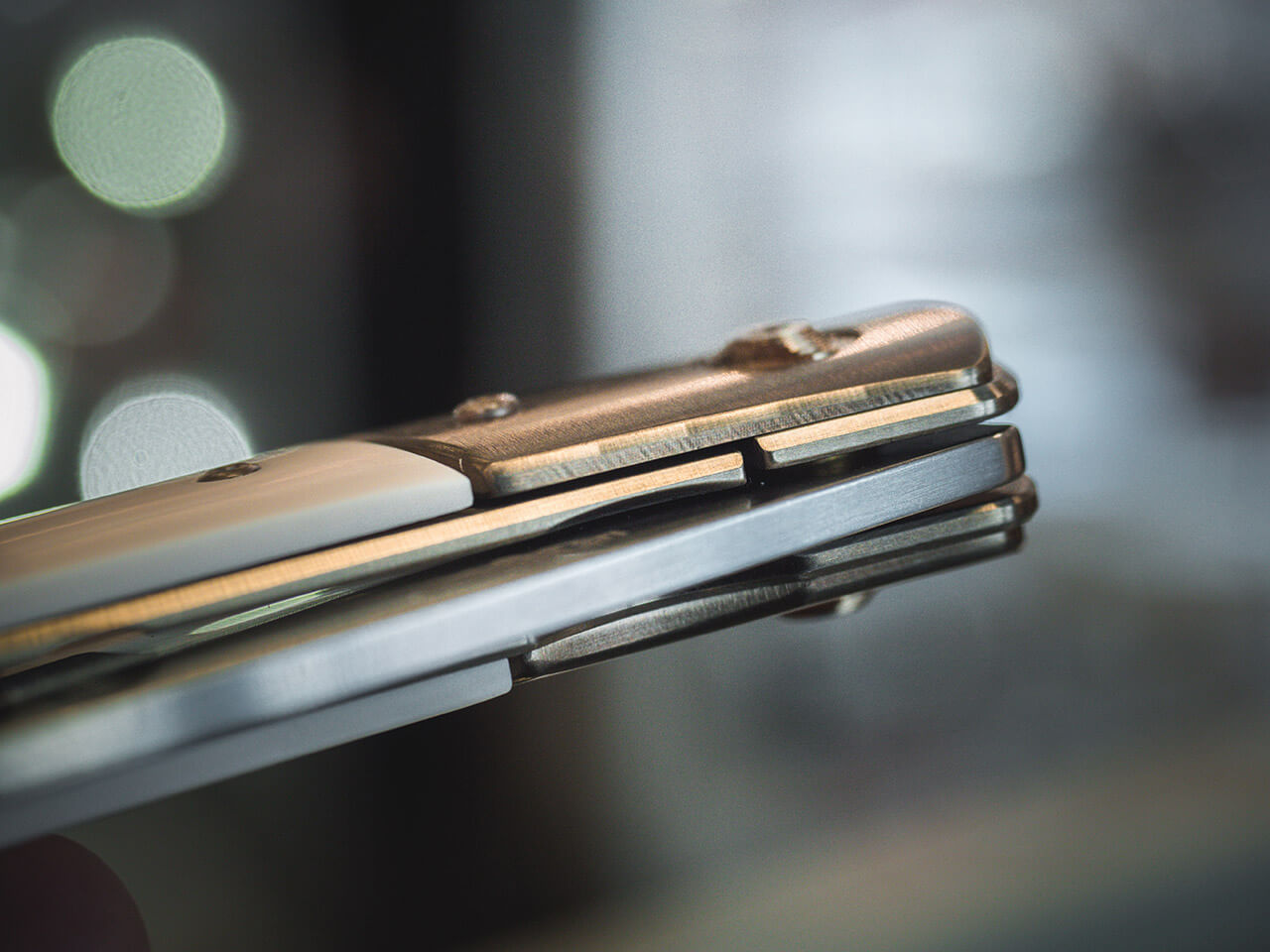
The liner lock mechanism, perfected by American knifemaker Michael Walker, is frequently used in pocket knives whose handles consist of metal liners and attached handle scales. Similar to the frame lock, a locking spring ensures that the blade is held in the open position. Unlike the frame lock, however, the locking spring is part of the liner and therefore significantly thinner. In handle designs without liners, the spring may also be a separate component inserted into the handle scale. When the knife is opened, the spring slides under the usually beveled stop at the base of the blade. By pushing the spring to the side, the blade can be folded back into place. A detent ball holds the closed blade in the handle. Even though the locking spring is usually considerably thinner than in the frame lock , the liner lock is a very reliable locking mechanism. A disadvantage of both systems, however, is that they are generally designed for right-handed use. Only a few manufacturers offer special left-handed models.
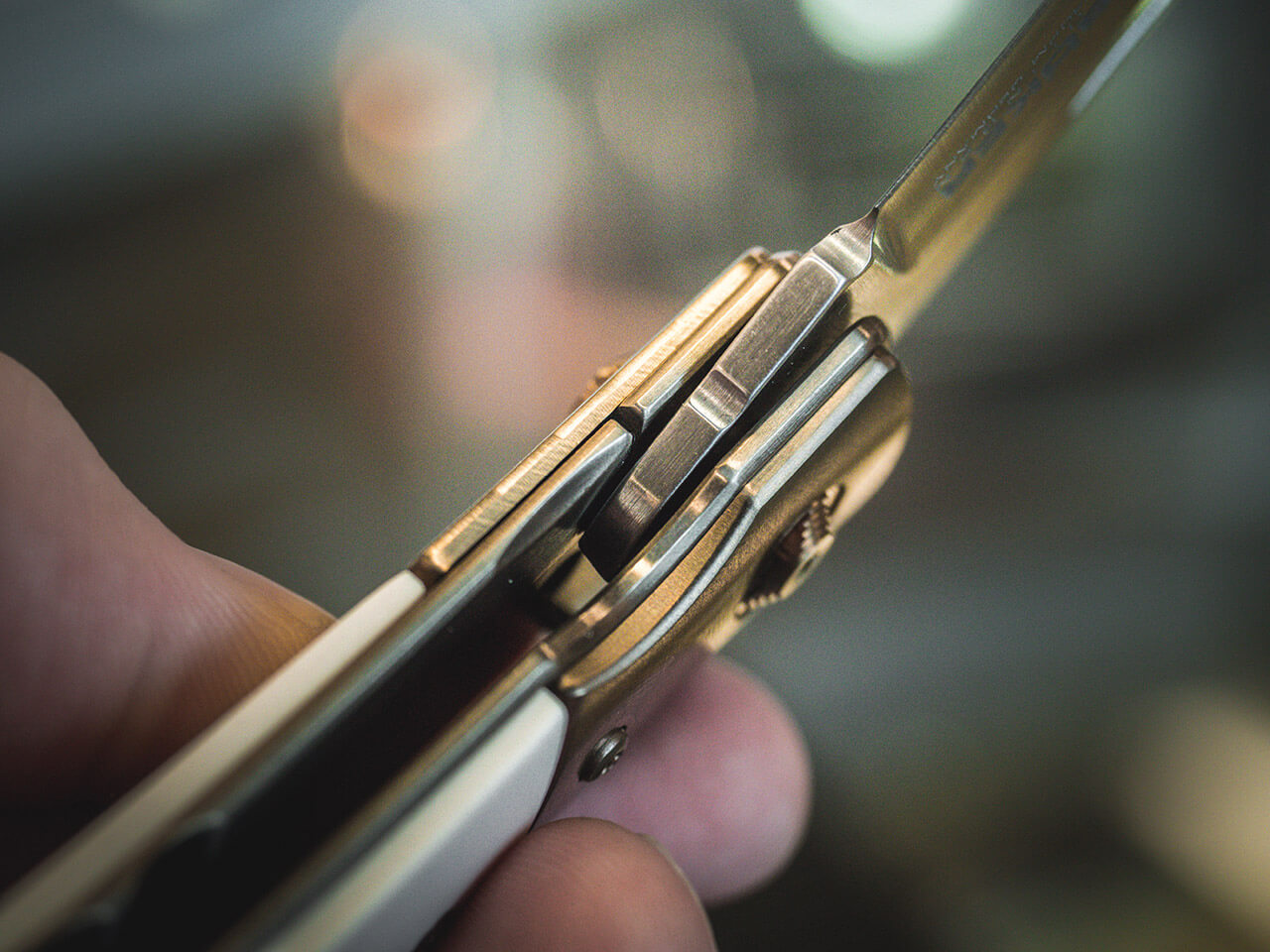
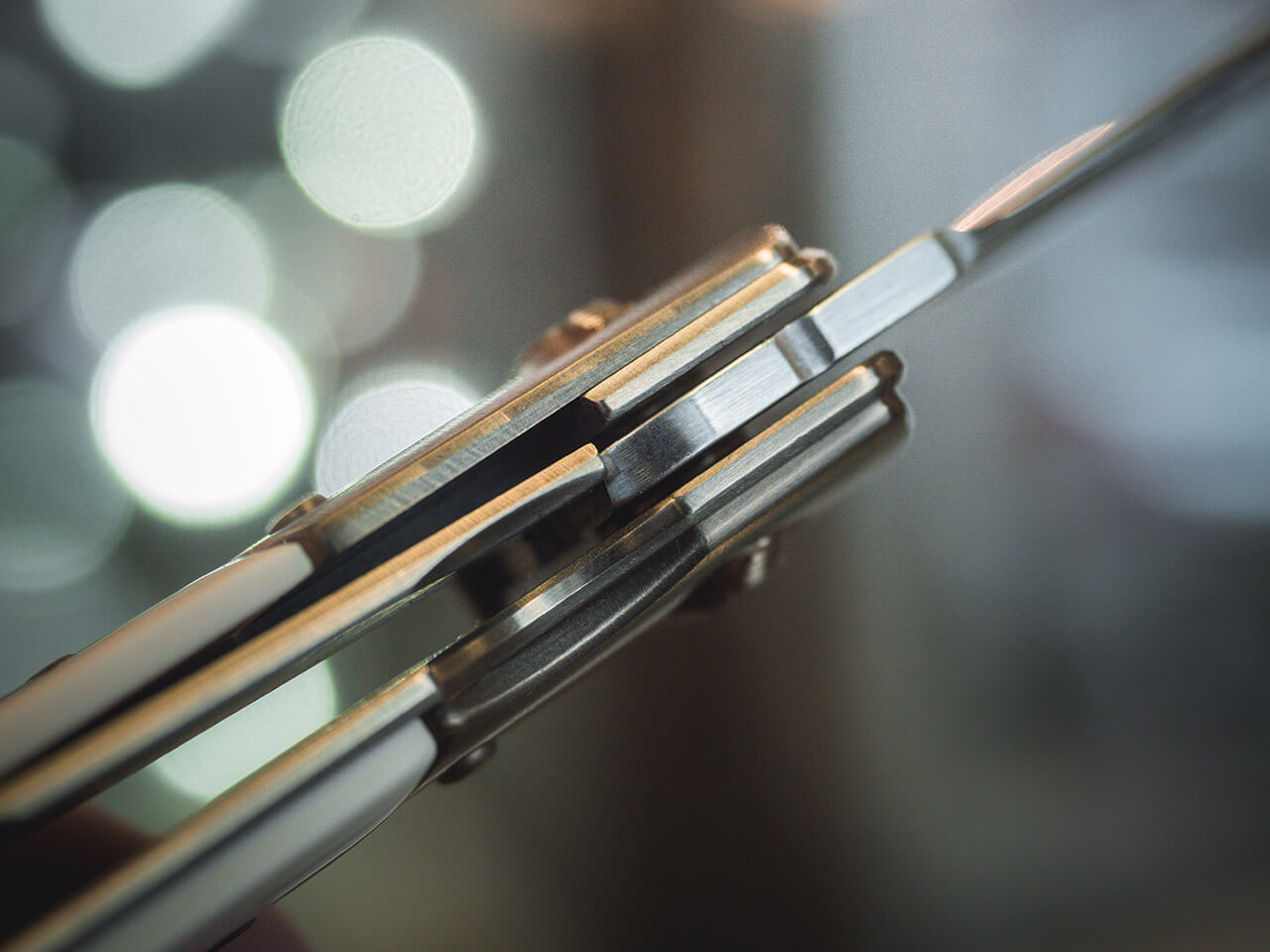
BUTTONLOCK / PUSH BUTTON
The push-button locking mechanism, also known as a button lock, consists of a locking bolt mounted on a coil spring. This bolt can be pressed down through a hole in the handle scale. When the blade is opened, the blade tang slides over the widened base of the bolt and pushes it downwards. The widened base engages precisely in a corresponding recess in the blade tang, thus locking the blade. When the bolt is pressed down using the push button, the smaller diameter portion of the bolt releases the blade tang. When the blade is closed, the coil spring pushes the bolt into a different groove, shaped to reliably hold the blade in the handle.